Unlock the Power of AI for Email and Boost Your Email Productivity
Discover how AI can supercharge your email efficiency. Unlock the transformative potential of artificial intelligence for streamlined email productivity.

Artificial Intelligence, or AI, is an integral part of our daily lives. It powers our virtual assistants, curates our entertainment, and it’s reshaping how we manage our emails. By incorporating AI, email services are bringing a new level of efficiency to our daily communications.
AI plays a significant role in organizing and managing our email inboxes. From sorting our emails to predicting our typing, AI is continuously working behind the scenes to make our lives easier. Let’s delve a little deeper into each feature and how it works.
Automatic email categorization, one of the most important features of AI in emails, works by studying patterns in the emails you receive. It recognizes newsletters, notifications, personal emails, promotional emails, etc., and automatically sorts them into different folders or labels. It helps you separate the important emails from the less important ones, saving you time and stress. You no longer need to wade through a sea of irrelevant emails to find the ones that matter.
Spam detection is another crucial area where AI is making a huge difference. Machine learning algorithms are trained to recognize patterns in spam emails, from the subject line to the body of the email and even the metadata. As more data is collected, the algorithm becomes better at recognizing and filtering spam. It doesn’t just protect us from annoying marketing emails, but also from phishing attempts and other potential threats.
Predictive typing and autocomplete are other AI-driven features that have made a significant impact. Using natural language processing (NLP) and machine learning algorithms, these features understand your writing style and predict what you might want to say next.
It’s like having a buddy who knows what you’re thinking! Not only does this save time, but it can also help us write emails that are clearer, cleaner, and sound just like us. It’s technology meeting the human touch.
AI technology can systematically send emails, interact with incoming messages, and manage the gradual increase of email volume. This, in turn, helps prevent your emails from being marked as spam or getting filtered into other non-primary folders. Through learning patterns and behaviors, AI can simulate human-like interaction, ensuring your emails remain credible and authentic. The use of AI doesn’t stop there, it can also monitor bounce rates, spam complaints, and other key metrics, making your email warm-up process more efficient, effective, and data-driven.
Now let’s move on to scheduling. AI-powered email tools can analyze historical data and predict the best time to send emails. This feature is particularly useful for marketing emails, where timing can make a huge difference in engagement rates. Meeting scheduling can also be done using AI tools that can understand language and context in emails, and suggest meeting times based on both parties’ available slots.
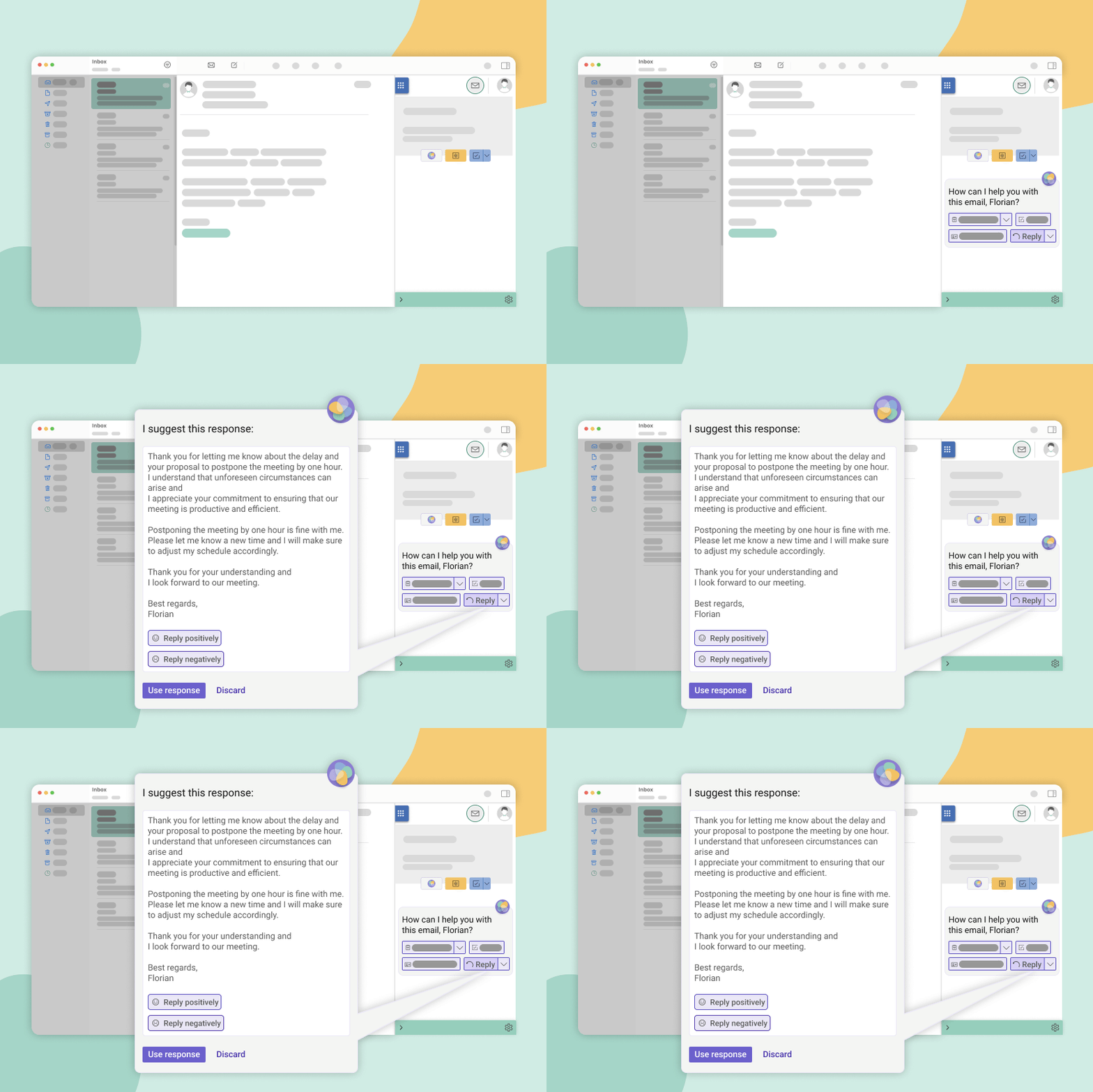
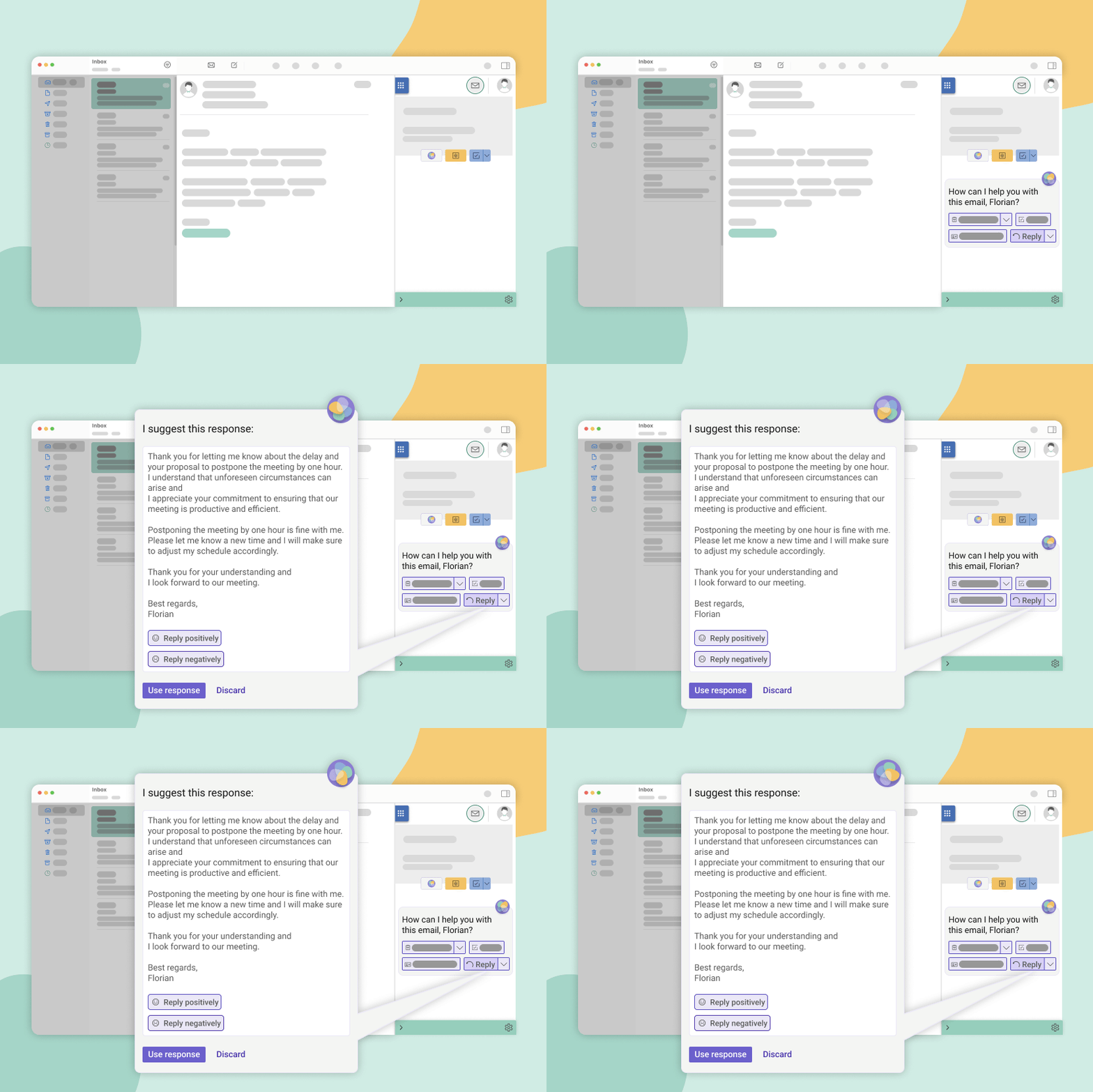
When it comes to email analysis, tools like sentiment analysis can be immensely helpful. These tools can detect the overall sentiment (positive, negative, or neutral) in an email, helping you understand the tone of your emails and respond accordingly. This is incredibly useful in business communication, where the right tone can make a huge difference.
So what exactly is sentiment analysis? At its core, sentiment analysis is the use of AI to determine the emotional tone behind words. It helps to identify whether the content of an email is positive, negative, or neutral. This allows you to gain a clearer understanding of the overall mood or sentiment of the email.
Let’s put this into context with an example. Suppose you receive an email from a client who is unhappy with a recent service provided. The email could be filled with phrases such as “I’m dissatisfied,” “unhappy with the service,” or “expected better performance.” An AI tool equipped with sentiment analysis would quickly flag this email as having a negative sentiment. Armed with this knowledge, you can swiftly respond to the client’s concerns and address the issue, demonstrating to the client that their satisfaction is your priority.
Similarly, if you get an email filled with positive phrases such as “excellent job,” “impressed with the service,” or “looking forward to our continued collaboration,” the AI tool would classify the email sentiment as positive. This is an excellent opportunity for you to reinforce this positive relationship with the client, perhaps by thanking them for their kind words and expressing your eagerness to continue working together.
Sentiment analysis tools can also be extremely helpful when you’re dealing with a large volume of emails. Instead of manually going through every single email, the AI can give you an overall sentiment score for your inbox. This way, you can prioritize your responses, addressing any negative issues first.
Imagine having a personal assistant who understands your preferences, keeps your email organized, ensures that no important email is left unattended, and even helps write your emails. or even streamlines document workflows by integrating with tools to convert Word to PDF.
Sounds impressive, right? Well, that’s the power of AI when it’s integrated into your email.
To truly unlock the potential of AI, it’s important to acquaint yourself with the AI features that your email service provides. Don’t worry if you’re not a tech whiz – many of these features are user-friendly and require just a bit of tinkering to set up.
For example, let’s say you’re using Gmail, which has several AI features integrated into it. The ‘Smart Reply’ and ‘Smart Compose’ tools are especially useful. ‘Smart Reply’ gives you three quick responses based on the content of the received email. Let’s say a client asks if you’re available for a meeting tomorrow. The Smart Reply may suggest responses like “Yes, I am available,” “I am available, but only in the afternoon,” or “No, I am not available.” It’s as simple as choosing the most suitable response.
‘Smart Compose,’ on the other hand, helps you draft emails faster. As you type, it predicts the rest of your sentence, saving you precious seconds. If you’re drafting an email to follow up on a meeting, as soon as you start typing “Thank you for…,” Smart Compose might suggest “the productive meeting we had today.”
Using AI responsibly is a topic that should not be taken lightly. While AI can significantly improve your email productivity, it’s crucial to understand how your data is being used. Make sure you understand your email service provider’s privacy policy and data usage practices. Additionally, recognizing the limitations, consider the role of tools like best datacenter proxies and Virtual Private Networks (VPNs) in enhancing privacy and security. It’s also essential to remember that AI is not infallible. It’s a tool to assist you, but your judgment and your final review are still needed.
In essence, while AI can revolutionize the way we handle our emails and boost productivity, its usage needs to be balanced with ethical considerations, an understanding of the tool’s capabilities, and personal review.
Thinking about effective marketing, it’s important to reach people with messages that matter to them. Right now, that involves a lot of time trying to understand each customer. But what if AI could help us, making personalizing emails easier and quicker?
Imagine an AI that could craft subject lines and content unique to each reader, then send these emails at just the right time. It would mean no more guessing games, and fewer To make these messages feel even more authentic and relatable, using an AI humanizer can help transform robotic-sounding content into something that truly resonates with readers. AI could figure out the best time to send emails, improving your experience and helping businesses reach you more effectively.
For instance, take Mailbutler, an AI email assistant that can track emails, schedule them, and even snooze them to improve how you manage your inbox. The Smart Assistant also can understand the context of your messages and suggest responses that are professional and friendly, making writing emails easier.
Think about this too: AI could handle entire marketing workflows, sending personalized communications and alerts with little or no help from humans, thereby bolstering operational excellence. AI would examine workflow patterns, figure out the best ways to respond, and send automated messages. This would free up people to handle tasks that need their attention more.
AI could also help cut down on simple mistakes like hitting ‘Reply All’ by accident or typing an email address wrong. If an AI could write and send emails in your tone and style to the right people, it would reduce these errors.
AI could even simplify how we handle email threads involving multiple people. It could sort out complex email conversations and make them easier to follow. Features like liking, sharing, or commenting can give more flexibility in managing these conversations, a boon for professionals dealing with this every day.
AI could even make your emails more engaging by including interactive elements like quizzes or polls, giving businesses a leg up and helping them collect valuable data for marketing.
As we live more and more of our lives online, protecting personal data becomes critical. Future AI tools could use high-level encryption and two-factor authentication to protect our data, asking for our permission and making emails more secure.
To sum up, AI is revolutionizing our email experience. It’s helping us manage our inboxes, write better emails and even analyze our communication. While it’s a powerful tool, it’s crucial to understand its capabilities and limitations and use it responsibly. The future of email is here, and it’s powered by AI.
Are you ready to unlock its potential and boost your productivity?